Claims FNOL Intake
First notice of loss, 24/7/365. Voice AI triage on straightforward claims and licensed-agent handoff where coverage or complexity demands a human. AHT runs 476 seconds steady-state on auto and home programs.
Licensed, US-resident insurance agents who stay on your program. Voice AI that deflects the routine so your people hold the relationship on the calls that matter. Claims, CAT response, policy servicing, billing, retention, and Medicare, run under one operating discipline. 22 years. Zero regulatory events.

What insurance operators actually tell us
Market-conduct exams now look at call-level evidence, not sampled summaries. The NAIC Model Bulletin on AI now obligates 24 states to document AI governance. Licensed-agent supply has not kept pace with three straight years of program growth. Carriers do not need someone to answer calls. They need agents who hold the relationship, deflect the routine, and leave an audit trail the examiner can follow.
When a storm hits, we do not have the luxury of ramping up over weeks. We need a partner who can answer the first call within seconds and keep quality above 90 percent while we scale.
VP Claims Operations, National P&C Carrier
Demand for licensed agents has outpaced supply for three straight years. We are not looking for more offshore capacity. We are looking for a partner who can license and retain US-based talent state by state.
Chief Operations Officer, Personal Lines Specialty Insurer
One bad claim experience and half our customers are gone. The claims call is where the relationship is made or lost.
SVP Customer Experience, Regional Auto and Home Carrier
22 years building insurance capability
We have run personal lines customer care since 2003, FNOL operations since 2007, PCI-compliant premium handling since 2014, catastrophe response since 2019, and QEval-covered insurance programs since 2022. Every evolution carries the same compliance record: zero breaches across 22 years of continuous regulated operations.
Where our insurance programs live
Every program below is live today on a property and casualty carrier, a specialty insurer, an auto warranty, or a Medicare plan. Agents are trained in the carrier's policy admin, claim systems, and state-specific regulations. Scorecards are written to the carrier's retention, conversion, and market-conduct targets. Not ours.
First notice of loss, 24/7/365. Voice AI triage on straightforward claims and licensed-agent handoff where coverage or complexity demands a human. AHT runs 476 seconds steady-state on auto and home programs.
Tier I and Tier II policyholder support through the life of a claim. Voice AI handles roughly 80 percent of status inquiries. Tier II is reserved for coverage interpretation, adjuster routing, and retention conversations.
72-hour activation. Pre-vetted sub-vendor network scales to 2,500 agents on a single carrier program. A 15 percent flex overage stays held back for absenteeism and surge. Quality enforced across every sub-vendor through QEval.
Endorsements, ID cards, address and driver changes, coverage adjustments, renewal mechanics. Dominates call volume in non-CAT windows and carries most of the emotional relationship equity with policyholders.
Premium handling under PCI-DSS Level 1 Service Provider scope. Auto-redaction of PCI, PHI, and PII at the point of capture. Payment arrangement, lapse prevention, and reinstatement workflows for retention.
US-resident licensed agents for P&C, L/H, and Medicare lines. Champion-Challenger script methodology in live production. Conversion-lift pattern documented across 22 sales programs in the Etech network.
Bundle attach, multi-line discount cross-sell, cancel-save programs. The work that turns home-plus-auto retention from the 84 percent standalone baseline toward the 95 percent bundled ceiling.
AHIP-certified agents. TPMO-compliant recording and 10-year retention built into the pipeline. HIPAA-covered data handling, state licensing verified every plan year, CMS Medicare Marketing Guidelines enforced at script level.
When the storm hits
Catastrophe response is the moment insurance contact centers either hold the brand or lose it. The carrier needs answered calls in seconds, consistent quality across every sub-vendor on the panel, and an audit trail the state DOI can follow. Etech runs the 72-hour playbook below on every CAT activation.
The handoff inside the CAT
Voice AI deflects roughly 80 percent of status inquiries during an active CAT. Licensed agents handle the 20 percent that need empathy, coverage interpretation, or decision authority. The carrier does not pay for unnecessary human minutes. The policyholder gets a human when it counts.
Outcomes our insurance clients report
Every figure below is a carrier-reported outcome from an active P&C, specialty, or Medicare program. None of them are Etech self-assessments.
What insurance compliance teams actually check
Every shortlisted BPO has a SOC 2 report. The seasoned insurance compliance lead looks next at the operating evidence: the TCPA violation record across real interaction volume, the NAIC Model Bulletin AI disclosure workflow, the GLBA subprocessor monitoring cadence, and whether the licensing program actually keeps US-resident agents current state-by-state.Live attestations: trust.etechgs.com
Security, availability, and confidentiality attested annually across every U.S., Jamaica, and India delivery center. One unified control environment, not site-by-site.
Information security management system certified to the current edition. Aligns with the evidence bar on most carrier procurement checklists.
Service Provider scope. Covers card-present and card-not-present premium payment workflows across every insurance program.
Business Associate Agreement in place on every health insurance line. Annual workforce training and quarterly incident-response tabletop.
Compliant with the May 2024 amendment. 30-day FTC notification workflow, annual risk assessment, continuous monitoring of every subprocessor.
Dedicated compliant dialer infrastructure. Zero TCPA violations across 14.2 million annual interactions. DNC scrub and consent capture enforced in the stack.
Program managers trained on NAIC Model 900 Unfair Claims Settlement Practices Act and state-specific claims handling timeframes. Live scripts reference state rules.
24-state coverage. AI-use disclosure workflows, documented AI governance program, and consumer notification handling embedded in QEval and Voice AI deployments.
Supplier diversity tier 1 and tier 2. Minority-owned and minority-and-women-owned business certifications current.
Twenty-two years of continuous insurance operations. Zero compliance breaches. Zero TCPA violations across 14.2 million annual interactions. That is the number that answers the question. The certifications are the paperwork behind it.
Live attestations on trust.etechgs.com →The compliance asset nobody talks about
The NAIC Model Bulletin on AI obligates insurers in 24 states to maintain documented AI governance and to disclose AI use to consumers. The GLBA Safeguards Rule amendment of May 2024 requires 30-day FTC notification on any breach affecting 500 or more customers and mandates continuous monitoring of third-party BPO providers. Medicare TPMO rules require 10-year call-recording retention and state-licensed US-resident agents on every sales call. None of this works with high attrition. When agents turn over every eight months, carriers re-license, re-train, and re-certify continuously. Compliance gaps open in the handoffs. Market-conduct exams find the gaps. Under 5 percent monthly attrition is not a nice-to-have. For regulated insurance programs, it is how audit risk gets controlled.
Monthly attrition
Under 5%
Average agent tenure
6.3 years
Years without a compliance breach
22
QA coverage per program
100%
State licensing program
In-house, US-resident
TCPA violations, 14.2M annual interactions
Zero
Monthly attrition
3 to 5% (30 to 45% annualized)
Average agent tenure
Under 12 months
QA coverage per program
2 to 5% sample
Licensing
Carrier-managed, re-credentialed each cycle
Market-conduct readiness
Reactive, sampling-based
TCPA risk posture
Platform-dependent, audit-by-audit
The handoff
Lowering call volume is a people strategy. The routine calls belong to Voice AI. The emotional, coverage-complex, and revenue calls belong to tenured licensed agents who stay on the program long enough to recognize the policyholder on the line.
Voice AI deflection benchmarks
Insurance blended target: 35% combined routine deflection once fully live
100% visibility for insurance
When the state DOI opens an exam, sampling gaps become findings. QEval reviews every call, every chat, every email across every insurance program. Unfair Claims Settlement issues, UDAAP exposures, and TCPA deviations surface within minutes of the interaction ending. Coaching prompts route to the supervisor and the agent automatically. The gap closes before the next call. For the 24 states now under NAIC Model Bulletin AI obligations, QEval is the documented AI governance artifact examiners ask for.
AI scoring
Every call, every channel. Sampling retires. Market-conduct posture improves on day one.
Auto-redaction
PCI, PHI, and PII redacted at point of capture. BAA and GLBA obligations stay downstream-light.
Coaching loop
One-click coaching from finding to supervisor to agent. 300 percent lift in coaching frequency documented.
Claims speech analytics
Insurance-tuned language models. Coverage terms, policy numbers, state-specific regulatory phrases captured accurately.
Regulatory flagging
Unfair Claims Settlement language, UDAAP exposure, and TCPA deviations flagged automatically. Findings route to supervisor and QA the same day.
Next-best-action
CoPilot surfaces the right script, the right disclosure, the right escalation path in real time. Agents act, not search.

QA score lift
within 90 days on active insurance programs. Not a quality management tool. A performance management platform.
Live insurance programs, anonymized
Catastrophe response. Licensed-agent growth. First-term retention. Each program anchored to its own audience and outcome metric. Each one engineered on the same operating principles: tenured agents, the carrier's scorecards, process intelligence as a first-class input, and a measurement system that covers every interaction.
 P&C catastrophe response
National P&C carrier, 16-vendor panel program
Hurricane landfall, panel quality variance, carrier brand on the line. 924 certified agents in 72 hours. QEval enforced a single standard across every sub-vendor. Voice AI absorbed status. Licensed agents took the 20 percent that needed a human. Carrier renewed multi-year.
 Specialty P&C growth
Specialty P&C insurer, 12-state personal lines
Zero to sixty million in written premium with no in-house call center and a licensed-agent gap across twelve states. Etech built the dedicated team. Champion-Challenger scripting drove the conversion curve. QEval tracked performance by tenure cohort. Four-year program and counting.
 Auto warranty retention
Auto warranty specialty line, regional carrier
First-term retention stuck below industry average. Etech deployed a dedicated renewal team with licensed agents, QEval coaching cadence, and a compliance-disclosed outreach flow. Renewal conversion moved 22 points inside two quarters. Program extended to second-term win-back.
Run. See. Build. Applied to insurance.
Most insurance BPOs offer one of these. A few offer two. The value of the full stack lives in the handoff: process findings that flow into workflow redesign, workflow redesign that flows into Voice AI and automation, automation that protects licensed-agent capacity for the relationship-critical calls.
Claims FNOL, CAT response, policy servicing, billing, licensed sales, retention, Medicare. Direct accountability for hiring, licensing, retention, ramp, and throughput. Servant-leadership management model. Tenured pods, not rotated shared floors.
QEval 100 percent interaction coverage. Market-conduct-ready evidence. Unfair Claims Settlement, UDAAP, TCPA flagged automatically. Findings route to the workflow, not just the coaching form.
ETSLabs. 250+ engineers. Proprietary LLM. Voice AI in production for claim status, FNOL triage, policy servicing. 30 to 90 day deploy. Zero vendor lock-in. The IP built for your program belongs to your program.
Insurance-grade delivery footprint
Licensed sales, CAT response, and state-specific regulated programs default to US onshore. Nearshore absorbs steady-state policy servicing and claims status. Offshore carries back-office, document processing, and 24/7 coverage under SOC 2 attested controls with GLBA vendor-monitoring discipline.
US onshore headquarters
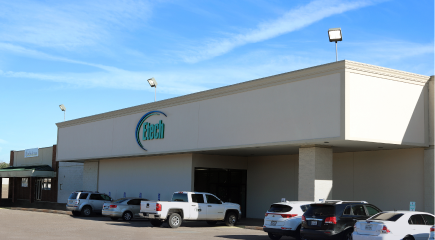
Licensed P&C, L/H, and Medicare agents. 2,400+ seats. Anchor delivery for CAT response, licensed sales, and regulated programs requiring US-resident staff.
Nearshore
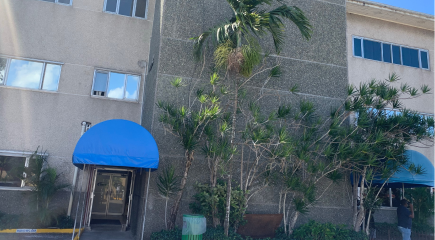
English-first nearshore delivery for claims intake, policy servicing, and escalations in US time zones. PCI-compliant premium handling on nearshore scope.

Offshore and AI lab
24/7/365 back-office claims processing, document AI operations, and ETSLabs engineering. SOC 2 attested controls, GLBA-compliant access, and vendor-monitoring cadence.
Continuity is an operating choice
The insurance BPO category has moved through platform consolidation, offshore margin compression, and private-equity roll-ups in rapid succession. Each cycle changed the people running the account. Each change reset continuity, retriggered licensing and HIPAA training, and broke the trust bank with policyholders. Etech is privately held, founder-led, and has carried the same compliance record since 2003. Multiple carrier programs are past year ten.
Speak with an insurance operations lead
CAT readiness scorecard. Licensed-agent pipeline audit. QEval market-conduct readiness review. Voice AI intent map for claim status, billing, and FNOL. An insurance operations lead, not a sales coordinator, will walk through your numbers and send a concrete point of view inside one business day.